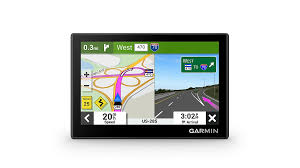

Navigation has always been a cornerstone of human exploration and development. From ancient maritime voyages to modern-day road trips and drone flights, the tools we use to find our way have advanced dramatically. In this article, we explore the evolution of navigation devices, examining the milestones that brought us from rudimentary compasses to today’s AI-powered GPS systems, and where the technology is headed next.
1. The Origins: The Compass and Celestial Navigation
The earliest navigation relied on natural cues:
- Celestial navigation: Ancient mariners used the stars and sun
- Magnetic compass: Invented in China around the 11th century
These tools were essential for sea exploration and long-distance travel.
2. Maps and Mechanical Tools
During the Age of Exploration:
- Cartography advanced with more accurate maps
- Astrolabes and sextants helped determine latitude
- Chronometers in the 18th century improved longitude calculations
These tools enabled safer and more precise sea voyages.
3. The Digital Revolution: Early Electronic Navigation
By the 20th century, navigation began embracing electronics:
- Radio beacons and LORAN systems allowed ships and aircraft to determine positions
- Inertial navigation systems (INS) were used in submarines and spacecraft
Military applications drove much of this innovation.
4. The Rise of GPS: Global Positioning System
Launched by the U.S. Department of Defense in the 1970s:
- Full civilian access in the 1990s transformed everyday travel
- Handheld GPS units became popular with hikers, pilots, and drivers
- GPS is accurate within 5-10 meters and improves with augmentation systems
Today, GPS is a global standard for positioning and navigation.
5. Integration with Mobile Devices
Smartphones revolutionized personal navigation:
- Google Maps, Apple Maps, and Waze offered real-time directions
- Turn-by-turn navigation became mainstream
- Offline mapping and multi-modal routing (driving, walking, cycling)
This shift made stand-alone GPS units less common for general consumers.
6. Vehicle Navigation and Telematics
Automotive systems embraced GPS:
- Built-in navigation in cars with voice control and live traffic updates
- Telematics systems collect and transmit vehicle data
- EVs use GPS to map charging station availability
These systems enhance driving efficiency and safety.
7. Aviation, Marine, and Specialized Use Cases
Navigation devices tailored to industries:
- Aviation: Glass cockpits with GPS integration
- Marine: Chart plotters, sonar/GPS combos
- Hiking and outdoor sports: Rugged handheld GPS units with topo maps
Each field has unique navigation needs that have driven innovation.
8. Smart Navigation: AI and Augmented Reality
2025 trends include:
- AI-driven route planning that learns user behavior
- Augmented Reality (AR) overlays for pedestrians and cyclists
- Voice assistant integration in wearables and smart glasses
Navigation is becoming proactive and more user-friendly.
9. Indoor Navigation and IoT
New challenges arise indoors:
- Bluetooth beacons and Wi-Fi triangulation for malls, airports, and hospitals
- IoT devices provide hyper-local data (e.g., parking availability)
These systems bridge the gap where GPS signals are weak or unavailable.
10. Privacy and Ethical Considerations
With increased capability comes responsibility:
- Data collection from navigation apps raises privacy concerns
- Tracking and geofencing must be transparent
- Ethical use of location data in marketing and law enforcement
Users must weigh convenience against data privacy.
11. The Future: Autonomous Navigation and Beyond
What lies ahead in navigation?
- Autonomous vehicles rely on HD maps, LiDAR, and real-time GPS
- Space exploration demands new celestial and inertial systems
- Neuro-navigation concepts explore brain-machine interfaces
Navigation will expand to new realms, both on Earth and beyond.
Conclusion: A Journey Through Innovation
From the magnetic compass to augmented reality overlays, navigation devices have transformed how we move through the world. As technology continues to advance, our ability to navigate will become more intuitive, accurate, and integrated into daily life. The evolution of navigation is far from over—and the next destination may be even more extraordinary than the last.